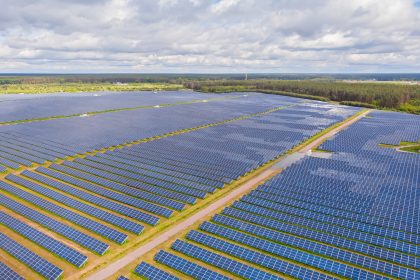



Africa holds a critical position in the global energy transition – both as a frontier for renewable deployment and as a proving ground for how legal and policy instruments can be used to mobilise capital at scale. The responsibility now facing many African governments is not just to attract investment, but to design the regulatory frameworks that make clean power bankable.
That shift is already visible on the ground.
Zambia, for example, recently took a landmark decision to soften the edges of its long-standing single-electricity buyer model. With the introduction of its Electricity Open Access Framework, the Sub-Saharan nation is empowering independent power producers to generate and sell electricity directly to consumers using the networks of ZESCO (Zambia Electricity Supply Corporation Limited), CEC (Copperbelt Energy Corporation Plc), or NWEC (North-Western Energy Corporation).
The move forms part of a broader policy alignment under Zambia’s National Energy Compact, launched in January as a formal pledge to accelerate clean energy deployment. The country is one of 12 African nations to have submitted such compacts under the “Mission 300” initiative, signalling a coordinated wave of regulatory and investment commitments across the continent. Taken together with parallel reforms in grid modernisation, regional interconnection, and procurement design, these measures reflect a quiet but significant shift: Africa’s energy transition is no longer being planned in advance – it is being regulated in real time.
And the momentum is building: according to a recent World Economic Forum study, Sub-Saharan Africa recorded the strongest global performance in advancing equity within the energy transition, with 10% growth over the past decade.
But this progress stands against a longer backdrop of policy volatility, which has historically undermined investor confidence in African energy markets—particularly where project horizons stretch across decades. However, several governments are now treating regulatory clarity as a strategic condition for private capital. Tariff reform is emerging in parallel – pushing beyond the binary of cost-reflectivity and affordability toward more commercially viable pricing models.
At the same time, energy systems are becoming more decentralised. As urban and peri-urban consumers disinvest from central grids, distributed solar has gained traction – not only through market dynamics, but through deliberate policy choices by African governments.
The financial architecture underpinning the continent’s renewable energy agenda is also evolving.
Regulatory frameworks are beginning to recognise green finance as a distinct category, with central banks in some jurisdictions introducing liquidity support mechanisms or easing constraints for commercial lenders investing in clean power. The terms of access – tenor, pricing, collateral – are slowly becoming more responsive to the realities of energy infrastructure financing.
The shift is uneven, and far from complete, but the trajectory is clear: regulation is being reshaped to absorb risk, mobilise capital, and sustain long-term investment. However, despite the pace of reform and project origination, structural bottlenecks remain embedded.
Chief among them is the persistent misalignment between new generation capacity and the transmission and distribution infrastructure required to deliver that power. Grid investment – particularly in transmission and distribution – has not kept pace with the development of generation assets, resulting in a growing risk of stranded capacity: megawatts that are added but cannot be absorbed, transferred, or distributed reliably due to outdated or insufficient network infrastructure.
What is needed is a more holistic investment paradigm – one that conceives of generation, transmission, and distribution as interdependent elements of a single strategy. In this context, regional power pools and cross-border transmission corridors are foundational, and without them, national grids will remain isolated, economies of scale will be lost, and the full value of renewable generation will remain unrealised.
Africa’s positioning as an investment destination is inextricably linked to regulatory coherence and political stability. Investors require not only transparent and durable policy frameworks, but confidence in the macro-political context in which those frameworks are applied. Consistency in national policy, credible tariff trajectories, and the presence of independent regulators remain critical markers of energy project bankability. Where governance is predictable and reform is institutionalised, investment risk becomes measurable – and, with the right structuring and risk mitigation, manageable. Additionally, access to foreign exchange, clarity around repatriation, and the availability of local-currency instruments will materially shape project viability.
Africa’s energy transition is not a waiting game. For those with long-term capital and a disciplined risk lens, the opportunity lies not only in unmet demand, but in the growing coherence of the systems built to meet it.