
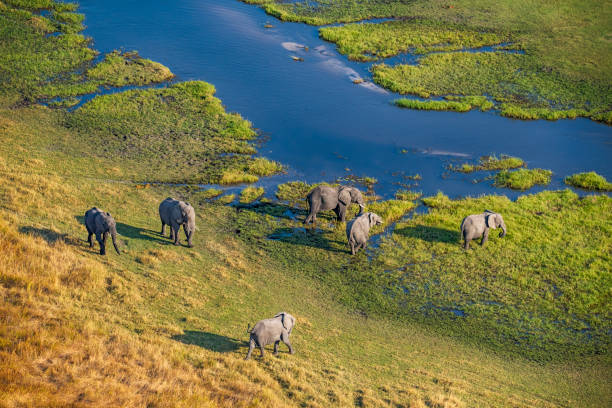

The Botswana government has launched an urgent investigation after multiple elephant carcasses were found in Gope, deep inside the Central Kalahari Game Reserve.
In a statement issued on 24 November, the Botswana Government Communication and Information Systems (BGCIS) said a preliminary field assessment was conducted following reports of elephant deaths. The reports also described damage to infrastructure and homes in the area.
The assessment found the carcasses around the closed Ghaghoo Diamond Mine. Officials stressed that the cause of death has not been scientifically established.
“The actual cause of death has not yet been scientifically established,” the statement said. “Authorities are examining several aspects of the incident, including a reported disruption to water-supply infrastructure in the area.”
Damage beyond the carcasses
The assessment also recorded substantial damage at the mine, at the Police Anti-Poaching Unit camp, and to homes in the Gope community. The statement did not say how the damage occurred.
Government said it recognises the seriousness of the situation and its effect on residents. Its immediate priorities are to assess the needs of affected households, restore water infrastructure, establish the full extent of the elephant deaths, and carry out the necessary veterinary and scientific investigations.
Why water matters
Water is a central concern in this part of the Kalahari. Researchers have documented elephants expanding their range into the reserve in recent years. A 2024 study of their movements called for management that links water distribution, elephant movement and human-elephant conflict.
Gope sits close to the Ghaghoo mine, which opened in 2014 and has been reported to have entered care and maintenance in 2017. A government news report has previously noted that the mine supplied Gope’s water, which makes any disruption to that infrastructure significant for both people and wildlife. Officials have not said whether the disruption is connected to the deaths.

